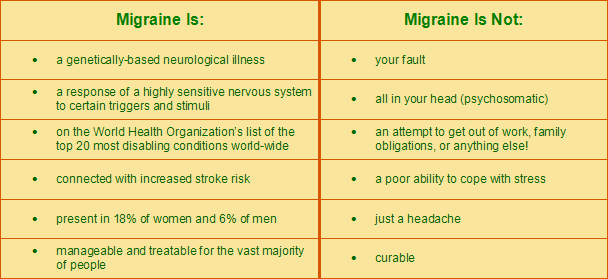
Migraine has now been shown to be a genetic neurological disease characterized by flare-ups most often called "Migraine attacks." A headache can be one symptom of a Migraine attack, but it's just that -- one of the possible symptoms. Some Migraineurs (people with Migraine disease) have Migraine attacks without having a headache.
 There are still multiple theories of what actually occurs in the brain when we encounter a trigger and a Migraine attack occurs. The most prevalent theory is that Migraineurs have overly excitable neurons in our brains. When a trigger is encountered, those neurons fire in a wave across the brain, starting a chain reaction. Blood vessels in the brain become dilated, nerves and tissues surrounding those vessels become inflamed, and the levels and balance of neurotransmitters such as serotonin, neoepinephrine, and dopimine are affected. It's this chain of events that cause the symptoms of Migraine. The possible aura, nausea, vomiting, sensitivity to light and sound, and the possible headache, a headache that is more often on one side and is often throbbing or pulsing and is made worse by phsyical activity. Other symptoms that can be quite frightening can include motor weakenss, difficulty speaking or concentrating, one-sided paralysis, or temporary blindness.
http://www.healthcentral.com/migraine/c/8937/7486/22807-podcast/
There are still multiple theories of what actually occurs in the brain when we encounter a trigger and a Migraine attack occurs. The most prevalent theory is that Migraineurs have overly excitable neurons in our brains. When a trigger is encountered, those neurons fire in a wave across the brain, starting a chain reaction. Blood vessels in the brain become dilated, nerves and tissues surrounding those vessels become inflamed, and the levels and balance of neurotransmitters such as serotonin, neoepinephrine, and dopimine are affected. It's this chain of events that cause the symptoms of Migraine. The possible aura, nausea, vomiting, sensitivity to light and sound, and the possible headache, a headache that is more often on one side and is often throbbing or pulsing and is made worse by phsyical activity. Other symptoms that can be quite frightening can include motor weakenss, difficulty speaking or concentrating, one-sided paralysis, or temporary blindness.
http://www.healthcentral.com/migraine/c/8937/7486/22807-podcast/
 http://freemybrain.com/

Migraine Podcast
http://www.migrainecast.com/2007/02/sample_post.html
Definition of Terms
Aura: a bright shape, flashes of light and color, or blurred vision that partially or totally blocks vision in one eye; numbness or tingling of the face; a feeling that one’s limbs are distorted, i.e., one hand is larger than the other; weakness or heaviness of the limbs; difficulty speaking and confusion.
Biofeedback Training: a non-drug migraine headache treatment that uses specialized equipment to teach the patient relaxation techniques that can be used to prevent or lessen the onset of a migraine attack.
Migraine Profile: a “diary” or written summary of your migraine frequency, severity, and treatment. A migraine profile helps the doctor diagnose and understand your condition.
Migraine-Related Stroke: called migrainous infarction or complicated migraine, is extremely rare. Symptoms include confusion, partial paralysis, speech impairement, and aura. Visual impairment on both sides, weakness of limbs, dizziness, and inability to walk properly. Risk factors include smoking, oral contraceptive use, and ergotamine use. These symptoms persist after the attack has ended. In some cases the impairments improve or disappear with treatment; in other cases they are permanent.
NSAIDs: Non-Steroidal Anti-Inflammatory Drugs that are can be used as migraine medications for treating moderate migraines. A few brands are now available over the counter. These medications have fewer side effects than stronger prescription drugs.
Postheadache: also called the postdrome, it is the 24-hour period after a migraine occurs. People may either experience fatigue and tiredness or euphoria or elation. It varies per person and is sometimes linked to the severity of the attack.
Preheadache: also called the prodrome, it begins a few hours before the migraine begins and is usually accompanied by irritability, fluid retention, increased thirst, or frequent urination.

 There are still multiple theories of what actually occurs in the brain when we encounter a trigger and a Migraine attack occurs. The most prevalent theory is that Migraineurs have overly excitable neurons in our brains. When a trigger is encountered, those neurons fire in a wave across the brain, starting a chain reaction. Blood vessels in the brain become dilated, nerves and tissues surrounding those vessels become inflamed, and the levels and balance of neurotransmitters such as serotonin, neoepinephrine, and dopimine are affected. It's this chain of events that cause the symptoms of Migraine. The possible aura, nausea, vomiting, sensitivity to light and sound, and the possible headache, a headache that is more often on one side and is often throbbing or pulsing and is made worse by phsyical activity. Other symptoms that can be quite frightening can include motor weakenss, difficulty speaking or concentrating, one-sided paralysis, or temporary blindness.

No comments:
Post a Comment